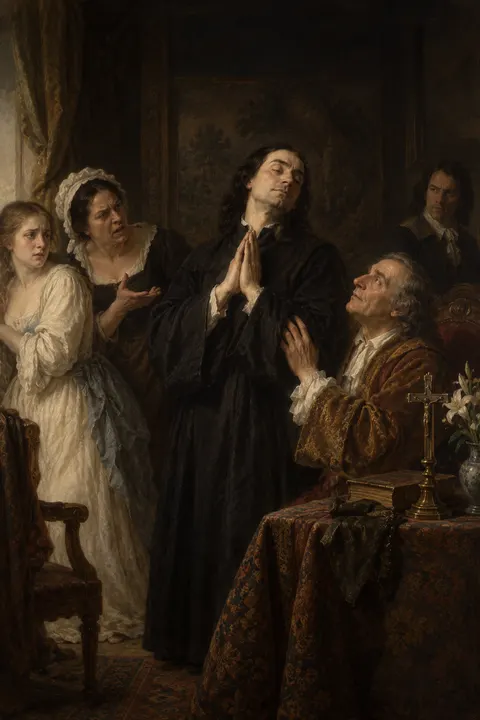
 Tartuffe; Or, The HypocriteMolière
OmniClassics · Literature
Tartuffe; Or, The Hypocrite
MolièreA household is divided by a guest whose reputation for holiness gives him dangerous influence over its master.
Progress is saved in this browser
About the book
Orgon trusts Tartuffe so completely that warnings from his family only strengthen his determination to defend the supposed holy man. His proposed marriage arrangement for his daughter turns that misplaced confidence into an immediate domestic crisis. Dorine's outspoken objections and Cléante's distinction between genuine devotion and its performance offer different ways of resisting the impostor's authority. The comedy develops through confrontations, overheard conversations, and attempts to make Orgon recognize what others can already see. Molière makes hypocrisy more dangerous than an individual vice: it becomes a means of controlling property, marriage, and speech. This English verse translation by Jeffrey D. Hoeper preserves the play's theatrical exchanges, inviting readers to hear how pious language changes when it meets appetite, impatience, or contradiction.
- Hypocrisy
- Authority within the family
- Appearance and belief
Why read it
For a swift theatrical contest between persuasive sanctimony and the practical intelligence of those forced to live with it.
English verse translation by Jeffrey D. Hoeper