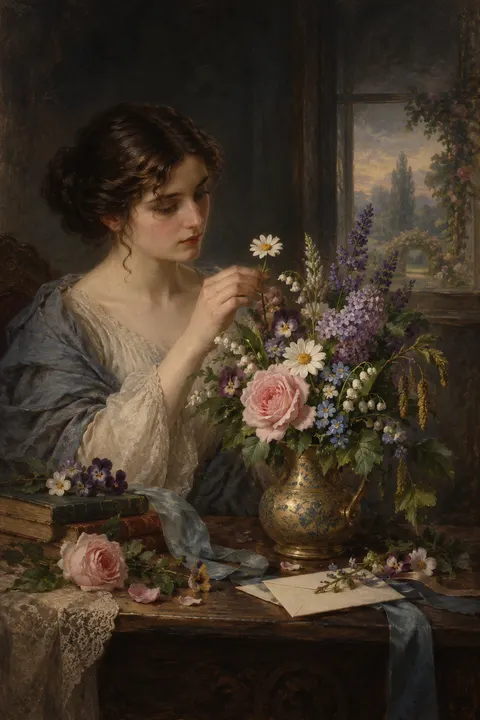
 The language of flowers The floral offering ; a token of affection and esteem ; comprising the language and poetry of flowersHenrietta Dumont
OmniClassics · Literature
The language of flowers The floral offering ; a token of affection and esteem ; comprising the language and poetry of flowers
Henrietta DumontFlowers become a vocabulary for affection, disappointment, remembrance, and social exchange.
Progress is saved in this browser
About the book
Henrietta Dumont's floral offering pairs plants with emotional meanings and gathers verse around those associations. A daisy signifies innocence, lavender distrust, and hazel reconciliation; the garden becomes a collection of messages that can be selected and combined. The prefatory argument treats this language as an expression of the connection between nature and human feeling, while the entries turn it into material for gifts, courtship, and cultivated conversation. Poetry extends each flower's meaning beyond a dictionary definition into scenes of longing, grief, or hope. This is a historical book of symbolism and literary sentiment, rather than a scientific guide to plant identification. Its pleasure lies in watching apparently modest botanical details acquire elaborate personal and social significance within nineteenth-century gift-book culture.
- Nature and symbolism
- Emotional expression
- Gift and courtship
Why read it
The entries reveal how readers could make a bouquet carry a miniature literary conversation.
English text of the 1851 Philadelphia edition
Contents and reading sections
- Section 1
- Section 2
- Section 3
- Section 4
- Section 5
- Section 6
- Section 7
- Section 8
- Section 9
- Section 10
- Section 11
- Section 12
- Section 13
- Section 14
- Section 15
- Section 16
- Section 17
- Section 18
- Section 19
- Section 20
- Section 21
- Section 22
- Section 23
- Section 24
- Section 25
- Section 26
- Section 27
- Section 28
- Section 29
- Section 30
- Section 31
- Section 32