 The Riddle of the SandsErskine Childers
OmniClassics · Literature
The Riddle of the Sands
Erskine ChildersA modest sailing invitation opens onto a problem hidden in coastal waters.
Progress is saved in this browser
About the book
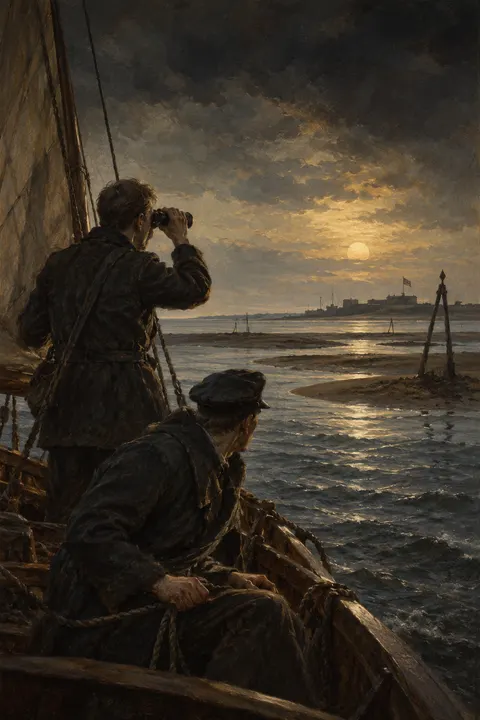
Carruthers accepts an invitation to join his acquaintance Davies on a sailing holiday and finds conditions less comfortable than he expected. Davies's concern about an earlier encounter gradually redirects the trip towards an investigation among the islands, channels, and shifting sands of the German coast. Childers makes navigation central to the suspense: weather, tides, visibility, and the limits of a small boat determine what can be discovered. The contrast between the two men gives the narrative both friction and a developing sense of practical partnership. Large political anxieties emerge through patient attention to local details rather than through a succession of spectacular confrontations. The adventure asks its readers to value competence and persistence, following how an uncertain suspicion can become a problem worth considerable personal risk.
- Espionage
- Navigation and expertise
- Friendship
Why read it
For unusually concrete sailing detail that makes the landscape and weather active parts of an espionage mystery.
English text
Contents and reading sections
- Section 1
- Section 2
- Section 3
- Section 4
- Section 5
- Section 6
- Section 7
- Section 8
- Section 9
- Section 10
- Section 11
- Section 12
- Section 13
- Section 14
- Section 15
- Section 16
- Section 17
- Section 18
- Section 19
- Section 20
- Section 21
- Section 22
- Section 23
- Section 24
- Section 25
- Section 26
- Section 27
- Section 28
- Section 29
- Section 30
- Section 31
- Section 32
- Section 33
- Section 34
- Section 35
- Section 36
- Section 37
- Section 38
- Section 39
- Section 40
- Section 41
- Section 42
- Section 43
- Section 44
- Section 45
- Section 46
- Section 47
- Section 48
- Section 49
- Section 50
- Section 51
- Section 52