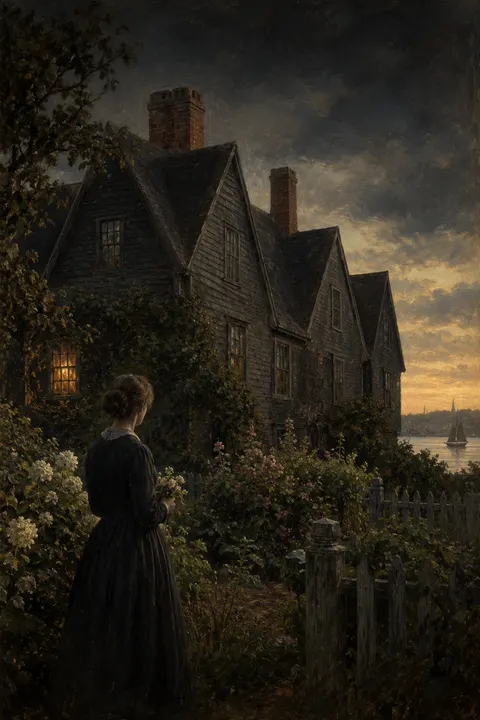
 The House of the Seven GablesNathaniel Hawthorne
OmniClassics · Literature
The House of the Seven Gables
Nathaniel HawthorneAn old family house shelters the continuing consequences of an injustice.
Progress is saved in this browser
About the book
The Pyncheon house carries a history of disputed property, family pride, and a curse whose significance remains uncertain. Within it, Hepzibah's attempt to support herself through a small shop brings inherited gentility into uncomfortable contact with daily necessity. The arrival of her young relative Phoebe introduces a different energy into the household, while Clifford's vulnerability and Judge Pyncheon's imposing respectability complicate its emotional life. Hawthorne combines domestic observation with Gothic suggestion, treating the house as both a place to inhabit and a burden to interpret. The novel asks how the living might separate their responsibilities from the claims of the dead. Its quieter scenes make the possibility of renewal depend on ordinary human attention as well as on the disclosure of concealed history.
- Inheritance
- Guilt and history
- Renewal
Why read it
For a Gothic family novel in which shopping, gardening, and companionship matter alongside the ominous weight of the past.
English text
Contents and reading sections
- Section 1
- Section 2
- Section 3
- Section 4
- Section 5
- Section 6
- Section 7
- Section 8
- Section 9
- Section 10
- Section 11
- Section 12
- Section 13
- Section 14
- Section 15
- Section 16
- Section 17
- Section 18
- Section 19
- Section 20
- Section 21
- Section 22
- Section 23
- Section 24
- Section 25
- Section 26
- Section 27
- Section 28
- Section 29
- Section 30
- Section 31
- Section 32
- Section 33
- Section 34
- Section 35
- Section 36
- Section 37
- Section 38
- Section 39
- Section 40
- Section 41
- Section 42
- Section 43
- Section 44
- Section 45
- Section 46
- Section 47
- Section 48
- Section 49
- Section 50
- Section 51
- Section 52