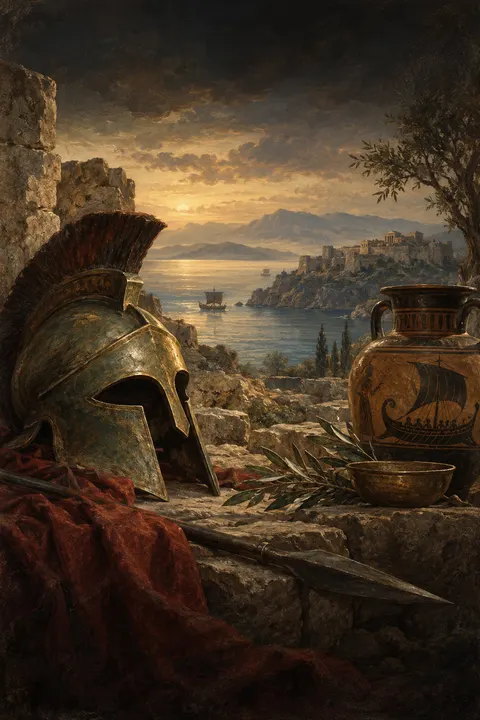
 The World of HomerAndrew Lang
OmniClassics · Literature
The World of Homer
Andrew LangMaterial details in the Homeric poems become evidence in an argument about the world and coherence of early epic.
Progress is saved in this browser
About the book
Andrew Lang examines Homer through the customs, objects, beliefs, and social arrangements represented in the poems. Archaeology and comparisons with other traditions enter an argument against readings that divide the epics too readily into inconsistent layers. The book is therefore a contribution to a scholarly controversy, not a neutral modern reconstruction of Bronze Age life. Lang explains his position in relation to earlier work, and readers can watch literary interpretation and material evidence being used to support one another. Its historical value includes the questions it asks, even where later discoveries or methods require different answers. Reading it beside an epic can sharpen attention to details of armour, burial, authority, and ritual that might otherwise pass as background to the action.
- Epic and society
- Archaeology
- Evidence and interpretation
Why read it
For a historically situated argument that makes the ordinary material details of epic newly noticeable.
English Homeric study by Andrew Lang · 1910
Contents and reading sections
- Section 1
- Section 2
- Section 3
- Section 4
- Section 5
- Section 6
- Section 7
- Section 8
- Section 9
- Section 10
- Section 11
- Section 12
- Section 13
- Section 14
- Section 15
- Section 16
- Section 17
- Section 18
- Section 19
- Section 20
- Section 21
- Section 22
- Section 23
- Section 24
- Section 25
- Section 26
- Section 27
- Section 28
- Section 29
- Section 30
- Section 31
- Section 32
- Section 33
- Section 34
- Section 35
- Section 36
- Section 37
- Section 38
- Section 39
- Section 40
- Section 41
- Section 42
- Section 43
- Section 44
- Section 45
- Section 46
- Section 47
- Section 48
- Section 49
- Section 50
- Section 51
- Section 52
- Section 53