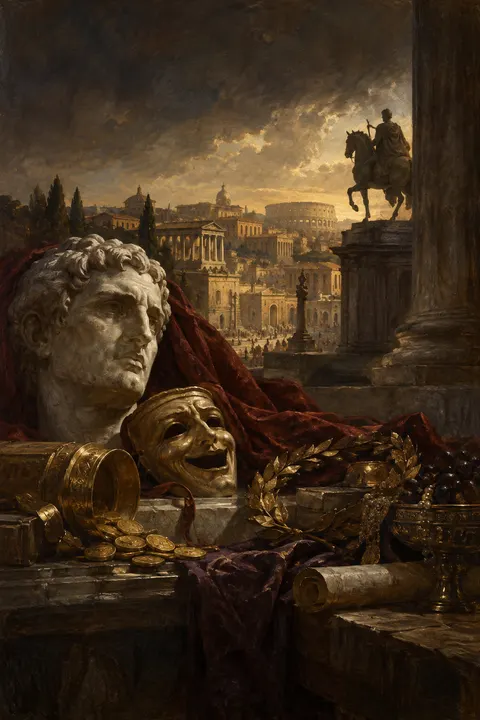
 The Satires of Juvenal, Persius, Sulpicia, and LuciliusJuvenal Gaius Lucilius Persius Sulpicia
OmniClassics · Literature
The Satires of Juvenal, Persius, Sulpicia, and Lucilius
Juvenal Gaius Lucilius Persius SulpiciaRoman satirical voices scrutinize wealth, pretension, corrupt ambition, and the uneasy performance of virtue.
Progress is saved in this browser
About the book
This volume combines Lewis Evans's prose translations of Juvenal, Persius, Sulpicia, and surviving material attributed to Lucilius with William Gifford's verse versions of Juvenal and Persius. The juxtaposition makes translation itself part of the experience, allowing differences in movement and emphasis to become visible. Across the works, attacks on luxury, flattery, greed, literary fashion, and moral hypocrisy create a forceful but partial picture of Roman life. The speakers' indignation is an artistic stance, not a transparent substitute for social history, and some judgments preserve harsh prejudices. Notes, arguments, and chronological material help orient readers among names and allusions. The 1881 collection therefore offers several authors, forms of survival, and English approaches within a single historically framed anthology of satire.
- Moral indignation
- Wealth and status
- Satire and social judgment
Why read it
The paired prose and verse translations invite comparison while the different satirists complicate any single account of Roman moral criticism.
Lewis Evans's prose translations with William Gifford's verse Juvenal and Persius, 1881
Contents and reading sections
- Section 1
- Section 2
- Section 3
- Section 4
- Section 5
- Section 6
- Section 7
- Section 8
- Section 9
- Section 10
- Section 11
- Section 12
- Section 13
- Section 14
- Section 15
- Section 16
- Section 17
- Section 18
- Section 19
- Section 20
- Section 21
- Section 22
- Section 23
- Section 24
- Section 25
- Section 26
- Section 27
- Section 28
- Section 29
- Section 30
- Section 31
- Section 32
- Section 33
- Section 34
- Section 35
- Section 36
- Section 37
- Section 38
- Section 39
- Section 40
- Section 41
- Section 42
- Section 43
- Section 44
- Section 45
- Section 46
- Section 47
- Section 48
- Section 49
- Section 50
- Section 51
- Section 52
- Section 53
- Section 54
- Section 55
- Section 56
- Section 57
- Section 58
- Section 59
- Section 60
- Section 61
- Section 62
- Section 63
- Section 64
- Section 65
- Section 66
- Section 67
- Section 68
- Section 69
- Section 70
- Section 71
- Section 72
- Section 73
- Section 74
- Section 75
- Section 76
- Section 77
- Section 78
- Section 79
- Section 80
- Section 81
- Section 82
- Section 83
- Section 84
- Section 85
- Section 86
- Section 87
- Section 88
- Section 89
- Section 90
- Section 91
- Section 92
- Section 93
- Section 94
- Section 95
- Section 96
- Section 97
- Section 98
- Section 99
- Section 100
- Section 101
- Section 102
- Section 103
- Section 104
- Section 105
- Section 106
- Section 107
- Section 108
- Section 109
- Section 110
- Section 111
- Section 112
- Section 113
- Section 114
- Section 115
- Section 116
- Section 117
- Section 118
- Section 119
- Section 120
- Section 121
- Section 122
- Section 123
- Section 124
- Section 125
- Section 126
- Section 127
- Section 128
- Section 129