 The Fables of La FontaineJean de La Fontaine
OmniClassics · Literature
The Fables of La Fontaine
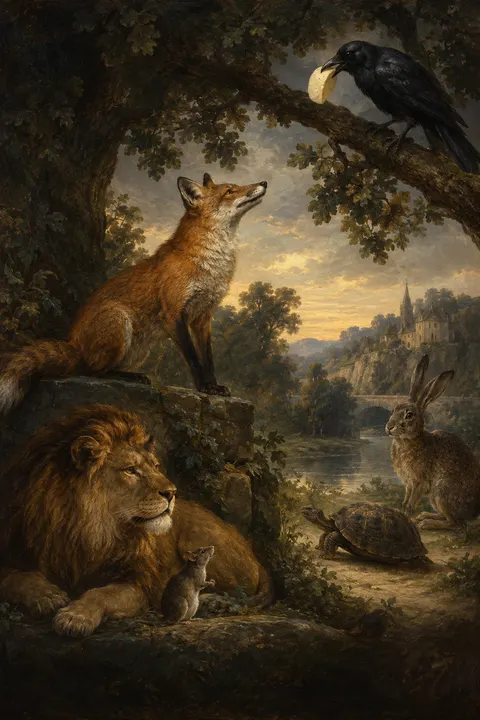
Jean de La FontaineAnimals and people negotiate appetite, vanity, and power in short verse narratives whose apparent lessons are rarely the whole pleasure.
Progress is saved in this browser
About the book
La Fontaine's fables turn encounters between unequal creatures into compact dramas of persuasion and judgment. Foxes flatter, wolves manufacture reasons, and weaker characters search for a way to survive arrangements they did not choose. Familiar plots coexist with shifts of voice and unexpected observations, so a fable can be enjoyed as a small performance as well as an argument. Walter Thornbury's English verse translation offers a wide collection, accompanied by introductory material about La Fontaine and Aesop. The sequence rewards comparison: a practical lesson in one story may sit uneasily beside the conduct rewarded in another. Rather than treating every ending as a universal instruction, readers can watch how circumstance, advantage, and the narrator's tone complicate the language of wisdom.
- Power and persuasion
- Practical wisdom
- Vanity
Why read it
For concise stories that make arguments about human conduct through memorable contests of voice and advantage.
English verse translation by Walter Thornbury
Contents and reading sections
- Section 1
- Section 2
- Section 3
- Section 4
- Section 5
- Section 6
- Section 7
- Section 8
- Section 9
- Section 10
- Section 11
- Section 12
- Section 13
- Section 14
- Section 15
- Section 16
- Section 17
- Section 18
- Section 19
- Section 20
- Section 21
- Section 22
- Section 23
- Section 24
- Section 25
- Section 26
- Section 27
- Section 28
- Section 29
- Section 30
- Section 31
- Section 32
- Section 33
- Section 34
- Section 35
- Section 36
- Section 37
- Section 38
- Section 39
- Section 40
- Section 41
- Section 42
- Section 43
- Section 44
- Section 45
- Section 46
- Section 47
- Section 48
- Section 49
- Section 50