 LawsPlato
OmniClassics · Literature
Laws
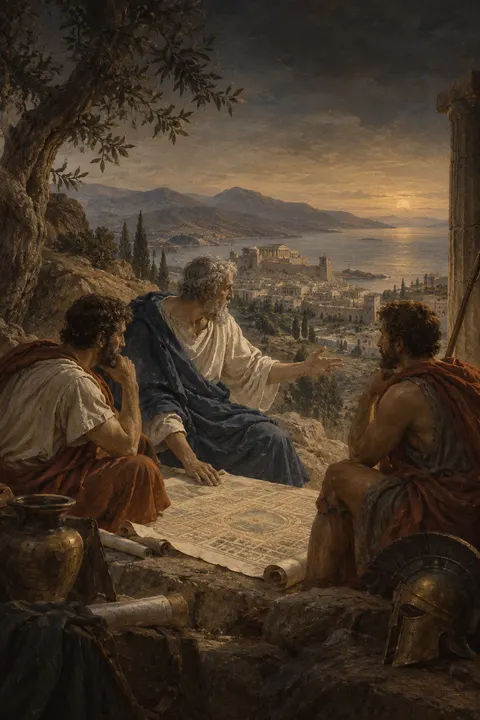
PlatoThree travellers design laws for an imagined city while asking what kind of character a political community should cultivate.
Progress is saved in this browser
About the book
An Athenian stranger converses with a Cretan and a Spartan during a journey on Crete. Their comparison of institutions becomes an extended project of legislation for a proposed settlement, bringing education, property, marriage, religion, offices, punishment, and daily conduct into the discussion. The dialogue asks not merely which commands citizens should obey but how law can persuade and form them. Its detailed arrangements make the relation between individual life and public purpose unusually concrete. Unlike dialogues centred on Socrates, this work gives an unnamed visitor the leading role and sustains its inquiry across twelve books. Readers encounter a demanding vision of civic order whose practical specificity continually raises questions about the balance between moral education, freedom, authority, and the reach of collective supervision.
- Law and education
- Civic order
- Authority and freedom
Why read it
For Plato's detailed exploration of how political ideals enter the routines, institutions, and restrictions of a city's life.
Philosophical dialogue · translated by Benjamin Jowett
Contents and reading sections
- Section 1
- Section 2
- Section 3
- Section 4
- Section 5
- Section 6
- Section 7
- Section 8
- Section 9
- Section 10
- Section 11
- Section 12
- Section 13
- Section 14
- Section 15
- Section 16
- Section 17
- Section 18
- Section 19
- Section 20
- Section 21
- Section 22
- Section 23
- Section 24
- Section 25
- Section 26
- Section 27
- Section 28
- Section 29
- Section 30
- Section 31
- Section 32
- Section 33
- Section 34
- Section 35
- Section 36
- Section 37
- Section 38
- Section 39
- Section 40
- Section 41
- Section 42
- Section 43
- Section 44
- Section 45
- Section 46
- Section 47
- Section 48
- Section 49
- Section 50
- Section 51
- Section 52
- Section 53
- Section 54
- Section 55
- Section 56
- Section 57
- Section 58
- Section 59
- Section 60
- Section 61
- Section 62
- Section 63
- Section 64
- Section 65
- Section 66
- Section 67
- Section 68
- Section 69
- Section 70
- Section 71
- Section 72
- Section 73
- Section 74
- Section 75
- Section 76
- Section 77
- Section 78
- Section 79
- Section 80
- Section 81
- Section 82
- Section 83
- Section 84
- Section 85
- Section 86
- Section 87
- Section 88
- Section 89
- Section 90
- Section 91
- Section 92
- Section 93
- Section 94
- Section 95
- Section 96
- Section 97
- Section 98
- Section 99
- Section 100
- Section 101
- Section 102
- Section 103
- Section 104
- Section 105
- Section 106
- Section 107
- Section 108
- Section 109
- Section 110
- Section 111
- Section 112
- Section 113