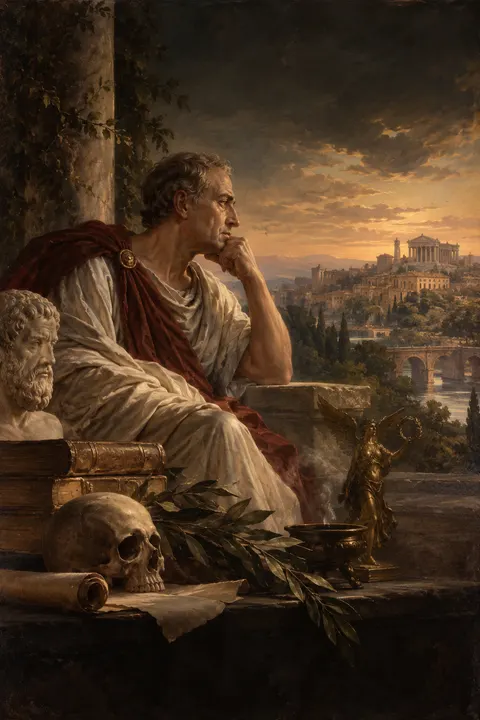
 Cicero's Tusculan DisputationsMarcus Tullius Cicero
OmniClassics · Literature
Cicero's Tusculan Disputations
Marcus Tullius CiceroCicero asks how philosophy can confront suffering, divine questions, and public life.
Progress is saved in this browser
About the book
The five Tusculan Disputations examine death, pain, grief, the passions, and the claim that virtue can provide happiness. Cicero develops the inquiry through argument, examples, and engagement with Greek philosophical schools, bringing abstract positions to bear on fears that shape ordinary life. This volume also contains On the Nature of the Gods and On the Commonwealth, extending its scope from personal resilience to religious debate and political order. The combination makes visible the breadth of Cicero's philosophical interests rather than presenting one uninterrupted treatise. Its historical English translations and revisions retain their own editorial framing. Across the works, the reader encounters competing positions and the persistent ambition to connect cultivated reasoning with the demands of living.
- Suffering and virtue
- Religion and argument
- Political community
Why read it
Read Cicero's ethical discussions alongside two other major areas of his philosophical inquiry.
English collected volume, translated chiefly by C. D. Yonge; additional translations revised
Contents and reading sections
- Section 1
- Section 2
- Section 3
- Section 4
- Section 5
- Section 6
- Section 7
- Section 8
- Section 9
- Section 10
- Section 11
- Section 12
- Section 13
- Section 14
- Section 15
- Section 16
- Section 17
- Section 18
- Section 19
- Section 20
- Section 21
- Section 22
- Section 23
- Section 24
- Section 25
- Section 26
- Section 27
- Section 28
- Section 29
- Section 30
- Section 31
- Section 32
- Section 33
- Section 34
- Section 35
- Section 36
- Section 37
- Section 38
- Section 39
- Section 40
- Section 41
- Section 42
- Section 43
- Section 44
- Section 45
- Section 46
- Section 47
- Section 48
- Section 49
- Section 50
- Section 51
- Section 52
- Section 53
- Section 54
- Section 55
- Section 56
- Section 57
- Section 58
- Section 59
- Section 60
- Section 61
- Section 62
- Section 63
- Section 64
- Section 65
- Section 66
- Section 67
- Section 68
- Section 69
- Section 70
- Section 71
- Section 72
- Section 73
- Section 74
- Section 75
- Section 76
- Section 77
- Section 78
- Section 79
- Section 80
- Section 81
- Section 82
- Section 83
- Section 84
- Section 85
- Section 86
- Section 87
- Section 88