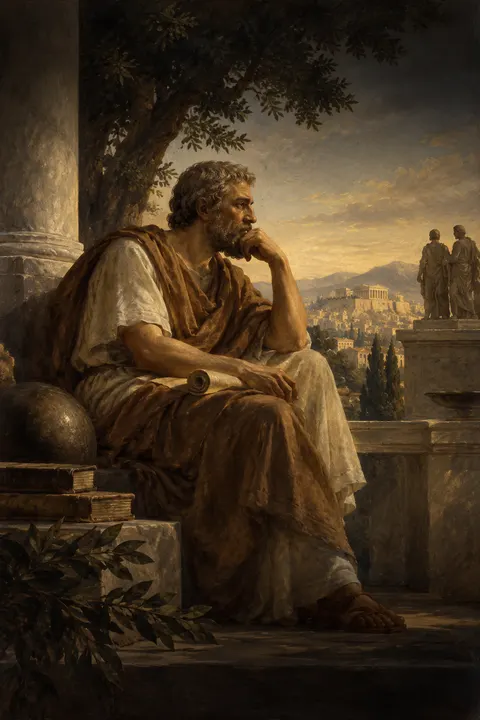
 The Nicomachean ethics of AristotleAristotle
OmniClassics · Literature
The Nicomachean ethics of Aristotle
AristotleAn inquiry into living well asks how character, judgment, and shared life become habits of action.
Progress is saved in this browser
About the book
Aristotle begins by asking what human activity ultimately seeks and what would make a life go well as a whole. His investigation turns towards the virtues, the formation of character through practice, and the role of judgment in responding appropriately to particular circumstances. Discussions of responsibility, justice, weakness of will, pleasure, and friendship make the inquiry broader than a set of rules for isolated decisions. The work repeatedly connects ethical understanding with experience, suggesting that knowing an account of good conduct is different from becoming able to act well. Its later reflections on contemplation place another kind of activity beside practical and social excellence. Readers encounter a sustained attempt to describe flourishing through the organization of a life, while also examining the assumptions and exclusions of its ancient setting.
- Flourishing
- Character and habit
- Practical judgment
Why read it
For a foundational account of ethics centred on the formation of a life rather than on isolated rules or choices.
English translation
Contents and reading sections
- Section 1
- Section 2
- Section 3
- Section 4
- Section 5
- Section 6
- Section 7
- Section 8
- Section 9
- Section 10
- Section 11
- Section 12
- Section 13
- Section 14
- Section 15
- Section 16
- Section 17
- Section 18
- Section 19
- Section 20
- Section 21
- Section 22
- Section 23
- Section 24
- Section 25
- Section 26
- Section 27
- Section 28
- Section 29
- Section 30
- Section 31
- Section 32
- Section 33
- Section 34
- Section 35
- Section 36
- Section 37
- Section 38
- Section 39
- Section 40
- Section 41
- Section 42
- Section 43
- Section 44
- Section 45
- Section 46
- Section 47
- Section 48
- Section 49
- Section 50
- Section 51
- Section 52
- Section 53
- Section 54
- Section 55